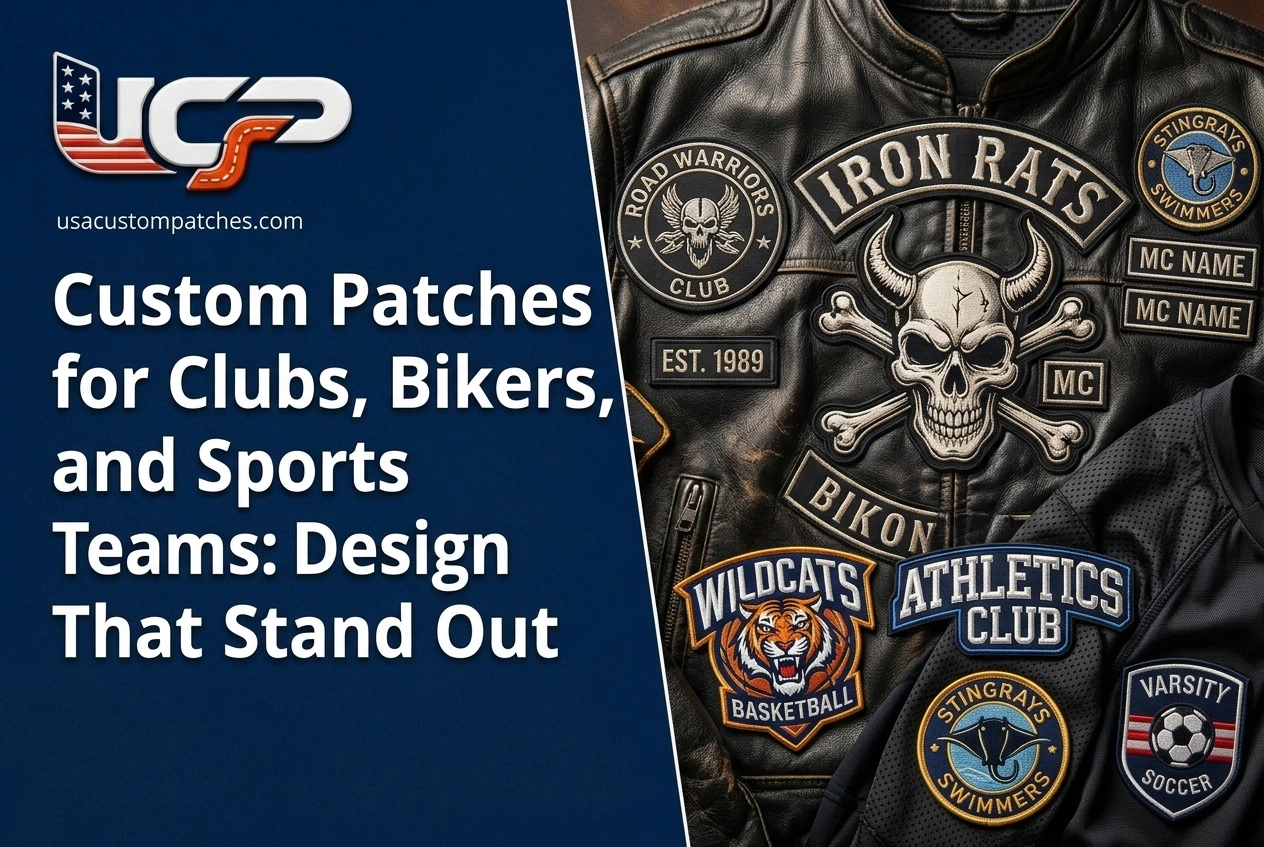
Walk into any motorcycle rally, high school gym, or local club meetup and you’ll notice something right away: the groups people remember are the ones who wear their identity proudly. A patch is more than thread and fabric. It’s a badge of belonging, a conversation starter, and a small piece of art that travels everywhere your members go.
Whether you’re launching a riding club, outfitting a youth soccer league, or refreshing the look of a long-running society, the right patch design can turn a plain jacket or jersey into a statement. Here’s how to create patches that people actually want to wear, and how to avoid the mistakes that make designs blend into the crowd.
Logos on a screen come and go. A patch gets stitched, sewn, or pressed onto something you own, and it stays there for years. That permanence builds loyalty. Members feel a stronger connection to a team or club when they carry a physical symbol of it.
Patches also do quiet marketing work. Every time a member wears one at a ride, a tournament, or a charity event, strangers see your name and your look. It’s recognition without a single ad dollar.
And they’re versatile. The same design can appear on jackets, vests, caps, backpacks, and uniforms, giving your group a consistent identity across everything it touches.
Biker culture has a long patch tradition, and riders take it seriously. A club back patch is often the centerpiece of a vest, so it needs presence from fifty feet away and detail up close.
Go big and simple at the core. The strongest biker designs use a clear central image, such as a skull, eagle, wolf, flame, or engine, with lettering that’s easy to read at a glance. Too many tiny elements get lost in the wind and distance.
Think in layers. Many clubs use a three-piece set: a top rocker with the club name, a center emblem, and a bottom rocker for the chapter or location. This structure is classic, and it also lets you add or swap pieces as your club grows.
Choose colors with contrast. Black, white, red, and gold are favorites for a reason. Against leather, high contrast keeps your design sharp. If your colors are muted, add a bold border to frame the artwork.
Pick durable construction. Riders deal with sun, rain, and road grime. Heavy-twill embroidery with a merrowed edge holds up season after season, and it keeps that rugged, authentic look bikers expect.
Sports patches carry a different feeling. They need to capture speed, rivalry, and team spirit while staying readable on a jersey sleeve, bag, or warm-up jacket.
Lead with the mascot. A fierce, well-drawn mascot gives a team personality instantly. Aim for clean lines and a confident pose. If the mascot looks different on every item, your branding feels scattered.
Use your team colors faithfully. Matching your uniform palette makes patches feel official. For multi-sport programs, a shared border style with sport-specific icons ties everything together while keeping each team distinct.
Add season and achievement details. Championship years, league names, and milestone badges give patches collectible value. Players love earning a patch that marks something they accomplished.
Think about placement. A sleeve patch has very little room, while a back patch can carry a full design. Size your artwork to its home before you finalize anything.
Hobby groups, alumni associations, scout troops, car clubs, and volunteer organizations often have the most creative freedom, since there’s no standard look to follow.
Start with what makes your group unusual. A hiking club might feature a mountain ridge with a sunrise. A fishing club might hide a small hook in the lettering. A robotics team could blend gears into the border. Those little details reward people who look closely, and they make your patch feel like it belongs only to you.
Humor works too. Many clubs build loyal followings with playful slogans and clever illustrations. Just keep the text short, since stitched lettering gets hard to read when it’s crowded.
No matter who you’re designing for, a few principles separate memorable patches from forgettable ones.
1. Limit your color count. Four to six thread colors usually look sharper than ten. Fewer colors also keep production cleaner.
2. Keep text legible. Block letters and bold fonts stitch best. Skip thin script styles that can fill in or blur.
3. Use borders wisely. A merrowed edge gives a classic, rounded finish, while a hot-cut edge works well for unusual shapes.
4. Experiment with shape. Not every patch needs to be a circle or rectangle. Shields, badges, and custom die-cut outlines instantly set you apart.
5. Mix textures. Combining embroidery with raised or woven elements adds depth that photographs can’t fully capture.
6. Plan for scale. A great design should still read well at three inches. Zoom out before you approve it.
Different materials create different personalities, so matching style to purpose matters.
Embroidered patches are the all-around favorite: classic, detailed, and affordable. They suit nearly every club and team.
PVC patches are rubbery, waterproof, and vivid. They’re ideal for outdoor groups, tactical-style designs, and anything exposed to weather.
Chenille patches have that soft, textured, varsity feel. Think letterman jackets and school spirit.
Woven patches capture very fine detail, making them perfect for intricate logos and small text.
Once your design is ready, the next question is who makes it and how many you need. Many groups worry about large minimums, especially new clubs or small teams ordering for the first time.
If you want quality and a reliable turnaround, working with custom patches made in USA producers means closer communication, faster shipping, and craftsmanship you can count on from proof to delivery.
Searching for custom patches USA vendors also makes it easier to ask questions, request revisions, and get the design just right before production begins. A good partner will guide you on thread colors, sizing, and backing options.
Starting small shouldn’t mean settling for less. Look for suppliers offering custom embroidered patches no minimum so a ten-member club can order exactly what it needs without overbuying.
Outdoor and tactical groups can also take advantage of custom PVC patches no minimum, getting durable, weatherproof designs in the quantity that actually fits their roster.
And if you run a league, school program, or merch shop, wholesale chenille patches let you stock up on varsity-style pieces at better per-unit pricing as your membership grows.
How a patch attaches matters nearly as much as how it looks.
For riders and athletes who put gear through heavy use, sew-on remains the safest choice.
Before you hit “approve,” run through these points:
Taking five extra minutes here saves headaches later.
Great patches don’t happen by accident. They come from knowing your group, choosing bold and readable artwork, and picking a style that fits how the patch will live. A biker club needs grit and layers. A sports team needs energy and color. A community club needs personality and a story worth sharing.
Whatever your crew looks like, the goal is the same: create something members are proud to wear and strangers can’t help but notice. Start with a strong idea, keep it simple, and let your patch do the talking.
Ready to bring your design to life? Share your concept with the team at USA Custom Patches, and let’s build something your group will wear for years.
New Order!
Someone from Edinburgh just placed an order!